Three updates landed this week for Indian passport holders. The October 2026 Henley Passport Index places India at 84th, and in the United States, the Department of Homeland Security published two rules on 14 October that matter to the large Indian H-1B community: a proposal to end "deference" for visa extensions, and a final rule ending automatic work-permit extensions for H-4 spouses and others. Here is what changed and what to do.
Rules checked on 15 October 2026.
The quick take
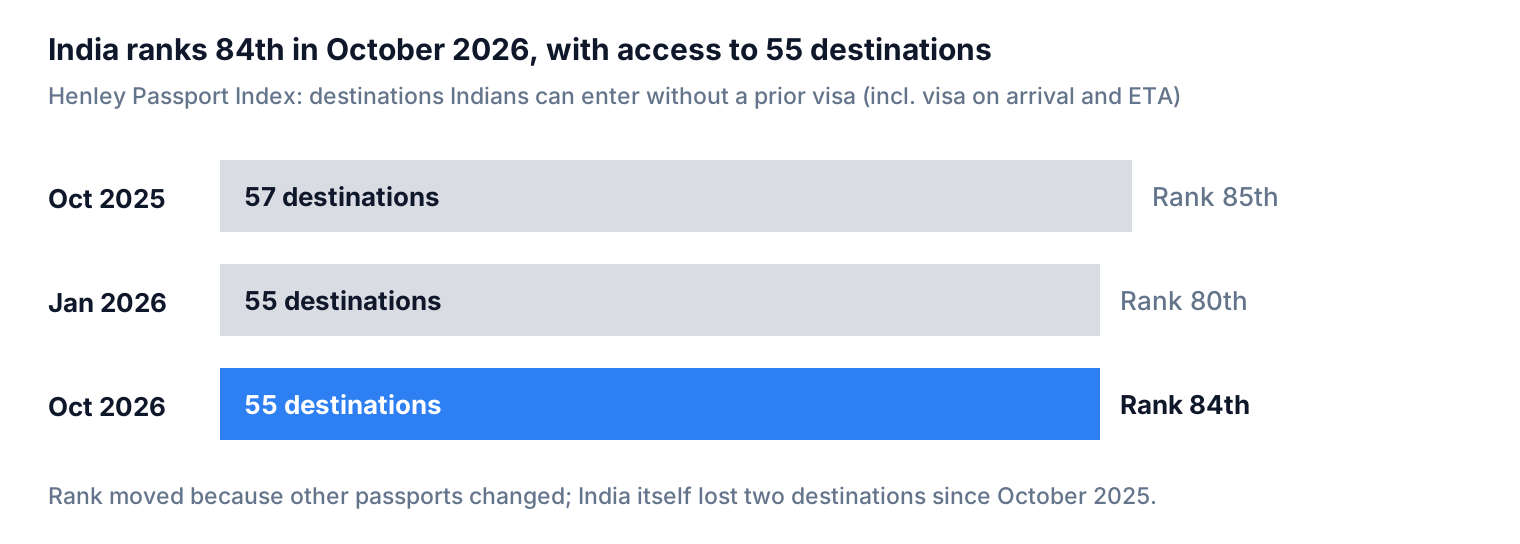
- Passport power: India is 84th on the October 2026 Henley Passport Index, tied with Algeria and Mauritania, with 55 destinations open without a prior visa.
- Rank up, access down: India moved up one place from 85th in October 2025, but lost two destinations (57 to 55).
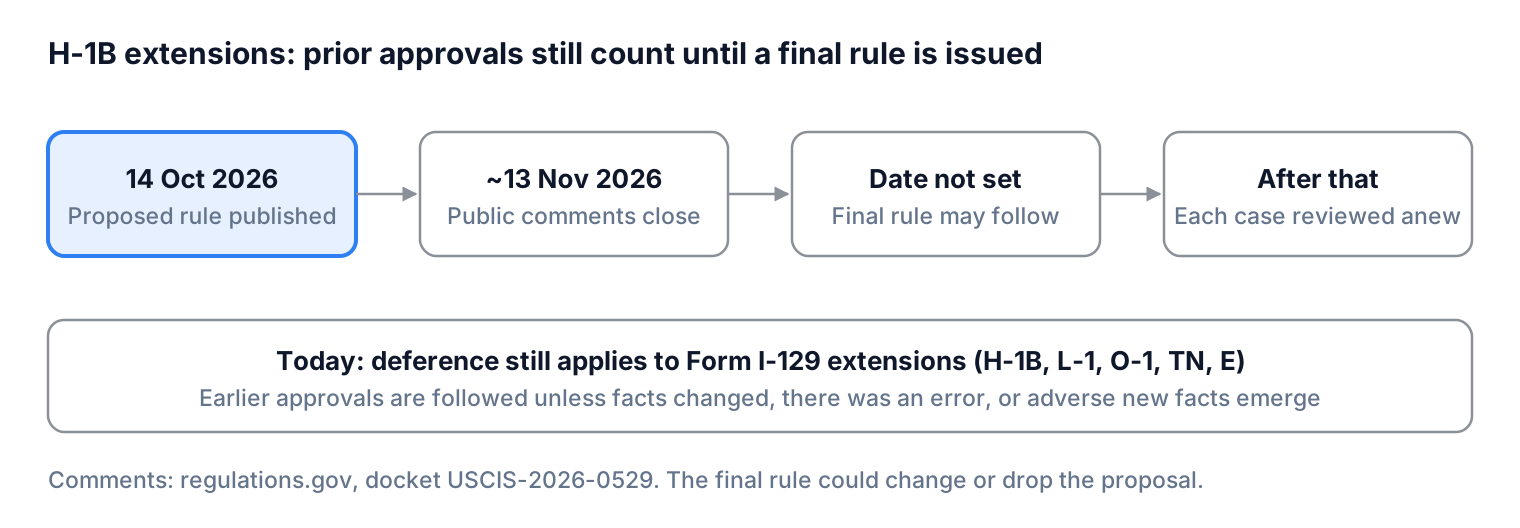
- H-1B extensions (proposed): DHS wants officers to stop deferring to earlier approvals on Form I-129 extensions. Not in force yet; comments close about 13 November 2026.
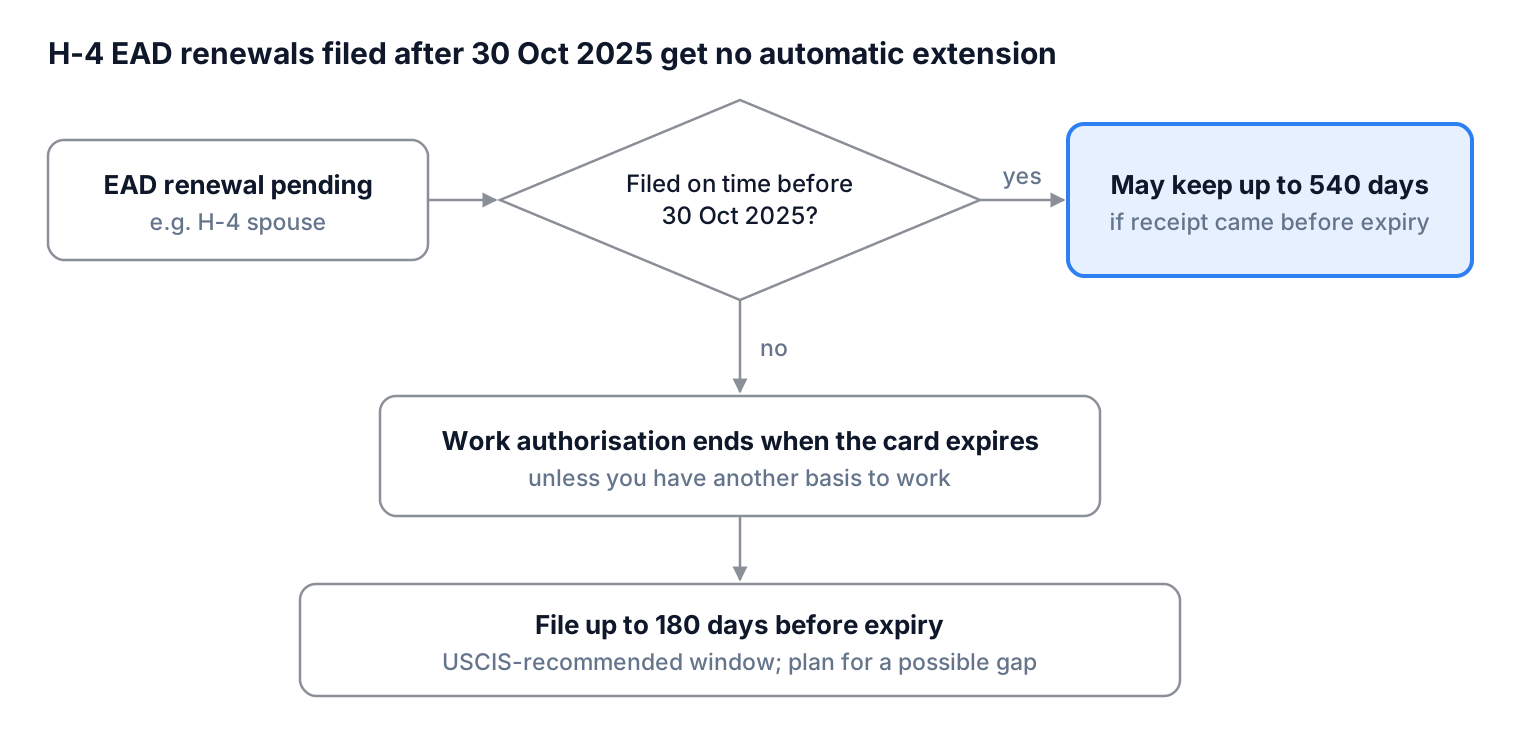
- H-4 EAD (final): renewals filed on or after 30 October 2025 get no automatic extension while pending. Effective 14 October 2026.
- Your move: check entry rules for your exact dates, file EAD renewals early, and prepare H-1B extensions as if they were new petitions.
At a glance
| Development | Date | What it says | What you should do |
|---|---|---|---|
| Henley Passport Index, October edition | Reported 14 Oct 2026 | India 84th; 55 destinations without a prior visa (57 in Oct 2025) | Confirm the entry rule for your destination and travel dates |
| US proposal: end deference for I-129 extensions | Published 14 Oct 2026 | Officers could re-examine eligibility already approved before | Comment by about 13 Nov 2026; file extensions with full fresh evidence |
| US final rule: no automatic EAD extensions | Effective 14 Oct 2026 | Renewals filed on or after 30 Oct 2025 are not auto-extended | File renewals up to 180 days early; plan for a possible work gap |
| US B1/B2 visitor visas | No change | Neither rule affects tourist or business visitor visas | Apply as usual; book interviews early given long waits |
Indian passport ranks 84th in October 2026
The latest Henley Passport Index, which ranks 199 passports against 227 destinations using IATA data, puts India 84th, sharing the spot with Algeria and Mauritania. Indian passport holders can enter 55 destinations without arranging a visa beforehand. That figure combines visa-free entry, visa on arrival and electronic travel authorisations, so not all 55 are fully visa-free.
Read the headline carefully. India climbed one place from 85th a year ago, yet its score dropped from 57 to 55. Business Today points out that the rank rose only because other countries' positions shifted. Compared with January 2026, when India stood at 80th with the same 55 destinations, the passport has slipped four places this year.
Among the visa-free examples the reports list for Indians are Bhutan, Nepal, Mauritius, Thailand, Malaysia, Kazakhstan, Fiji, Barbados, Jamaica and Rwanda. Conditions differ by country: stay lengths, arrival cards and onward-ticket checks all vary. At the top of the index, Singapore leads with 193 destinations, followed jointly by Japan, South Korea and the UAE on 188.
What Indian travellers should do:
- Treat any "visa-free list" as a starting point. Check the destination's official rules for your exact travel dates before booking.
- Look for pre-arrival steps that still apply to visa-free trips, such as digital arrival cards or online registration.
- Keep your passport valid for at least six months beyond your trip; many visa-free destinations require it.
US proposes ending "deference" for H-1B extensions
On 14 October 2026, DHS published a proposed rule titled "Removing Deference to Prior USCIS Determinations of Eligibility". Under the current policy, first introduced in 2004 and written into regulations in late 2024, officers deciding an extension generally follow an earlier approval involving the same parties and facts. They depart from it only if circumstances changed materially, the earlier decision was a clear error, or new adverse information came up.
The proposal would remove that instruction for all petitions filed on Form I-129, which covers H-1B, L-1, O-1, TN and E workers, among others. Officers could still consider a prior approval, but they would no longer be required to follow it, and could ask again for proof on points already accepted, such as whether the job qualifies as a specialty occupation. DHS itself estimates about 6,044 additional requests for evidence each year.
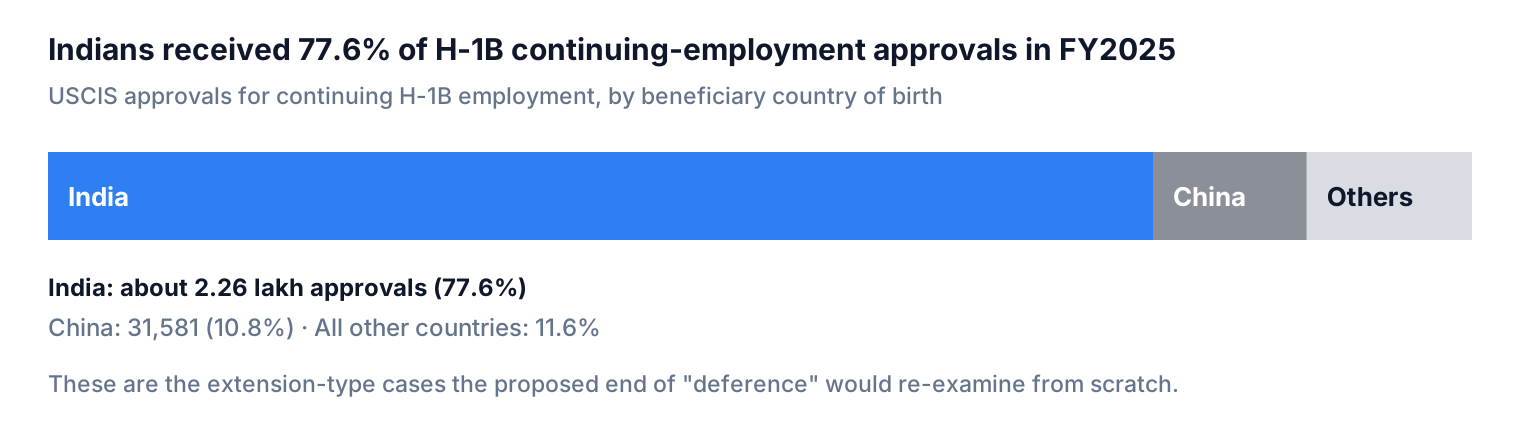
This matters disproportionately to Indians. In FY2025, USCIS approved about 2.26 lakh H-1B continuing-employment petitions for Indian-born workers, 77.6% of the category, far ahead of China at 31,581. When deference was withdrawn in 2017, H-1B extension denial rates rose to around 24%, according to Business Today.
What H-1B workers and employers should do:
- Remember the rule is only proposed. Deference still applies to extensions filed today.
- Prepare each extension as if it were a fresh petition: current job duties, wage records, employer documents and proof you have kept your status.
- Allow extra time for decisions and possible requests for evidence, especially before planned travel home to India.
- Employers and workers can comment on regulations.gov under docket USCIS-2026-0529 within the 30-day window.
H-4 spouses lose automatic EAD extensions
A separate DHS final rule, also published on 14 October 2026 and effective immediately, makes permanent an interim rule from October 2025. Employment authorisation document (EAD) renewals filed on or after 30 October 2025 no longer get an automatic extension of up to 540 days while they are pending. The change covers H-4 spouses of H-1B workers, people with pending green card (adjustment of status) applications, some asylum applicants and others.
Renewals filed on time before 30 October 2025 may keep the old extension, provided the receipt notice arrived before the current card expired. A September 2026 court order granted relief only to seven named H-4 spouses; it does not restore the extension for anyone else. DHS estimates 20,000 to 33,000 EADs could lapse over an 18-month period from 2027.
What H-4 spouses should do:
- File your EAD renewal as early as allowed: USCIS recommends up to 180 days before the current card expires.
- Do not treat a receipt notice as permission to keep working after your card expires, unless you have another basis to work.
- Plan finances and leave for a possible gap between expiry and approval.
- The H-4 EAD category itself still exists; only the automatic extension has gone.
Planning a trip abroad?
Whether you are heading to one of the 55 easier destinations or need a full visa, the rules for your dates are what count. For family visiting relatives in the US, visitor visa rules are unchanged by this week's news, but interview waits remain long, so start early.
Apply with Krosz
On Krosz, every application is handled one-to-one by a trained Krosz visa expert, who checks your forms and documents against the destination's current requirements before anything is filed. We never promise an approval: visa decisions always rest with the embassy or immigration authority.
The Krosz service fee is a flat ₹1,999 + 18% GST, with government visa fees shown separately at checkout, so you know exactly what you are paying for.
Planning your next trip? Check what your destination needs and start your application in minutes. Check your visa →
Sources
- Business Today: Henley Passport Index 2026, Indian passport climbs to 84th rank (14 Oct 2026)
- The Economic Times via inkl: Indian passport rises to 84th rank in Henley Passport Index 2026
- Gulf News: Indian passport climbs to 80th in 2026 ranking (Jan 2026)
- Business Today: Proposal to end H-1B deference policy puts lakhs of Indian workers at risk (15 Oct 2026)
- Manifest Law: DHS moves to scrap deference for visa extensions (13 Oct 2026)
- VitalLaw: DHS proposes ending USCIS deference policy for nonimmigrant worker extensions
- VisaVerge: DHS rule ends 540-day automatic extension for employment authorization documents (13 Oct 2026)
Visa rules change often. This article reflects information reported up to 15 October 2026 and is not legal advice; always confirm with the official embassy, USCIS or immigration portal before you travel or file.