Thinking of a US holiday, a family visit or a business trip next year? Start now. The wait for a US visitor visa interview in India now runs from 6.5 months in Kolkata to a full year in Hyderabad, while students and workers get slots much sooner. And if your children live in New Zealand, the country has just changed how it picks parents for residence.
Figures checked on 13 October 2026.
The quick take
- US visitor visa (B1/B2): the next interview is 12 months away in Hyderabad, 11.5 in Mumbai, 10 in New Delhi, 7.5 in Chennai and 6.5 in Kolkata (State Department data, 17 September 2026).
- US student and work visas: much shorter queues, from under half a month to 5.5 months depending on city and category.
- Why: fewer consular officers and rising demand. A GAO report cited by Business Today shows non-immigrant visa officers fell from 1,342 (2024) to 904 (2025).
- New Zealand parent visa: from 5 October 2026, about 90% of Parent Resident Visa EOIs are picked by queue date and 10% by ballot. First round on 10 November 2026.
At a glance: US visa interview waits in India
| US post | Visitor (B1/B2) | Student (F/M/J) | Work (H/L/O/P/Q) |
|---|---|---|---|
| Hyderabad | 12 months | 1.5 months | 5.5 months |
| Mumbai | 11.5 months | 2.5 months | 1.5 months |
| New Delhi | 10 months | 2 months | 3 months |
| Chennai | 7.5 months | Under 0.5 month | 1.5 months |
| Kolkata | 6.5 months | 2 months | 1 month |
Next available interview, per the US State Department's Global Visa Wait Times page as of 17 September 2026, as reported by Wego, Dainik Jagran English and Business Today. Estimates, not guarantees.
US visitor visas: up to a year for an interview
On 11 October 2026 Business Today reported US State Department wait-time data showing how long visitors queue for a US tourist or business visa interview around the world. Hyderabad's wait for the next B1/B2 slot is 12 months, Mumbai's 11.5 and New Delhi's 10. Globally, Sydney (21 months) and Toronto (20 months) top the list, with several other Canadian cities at 14 months or more.
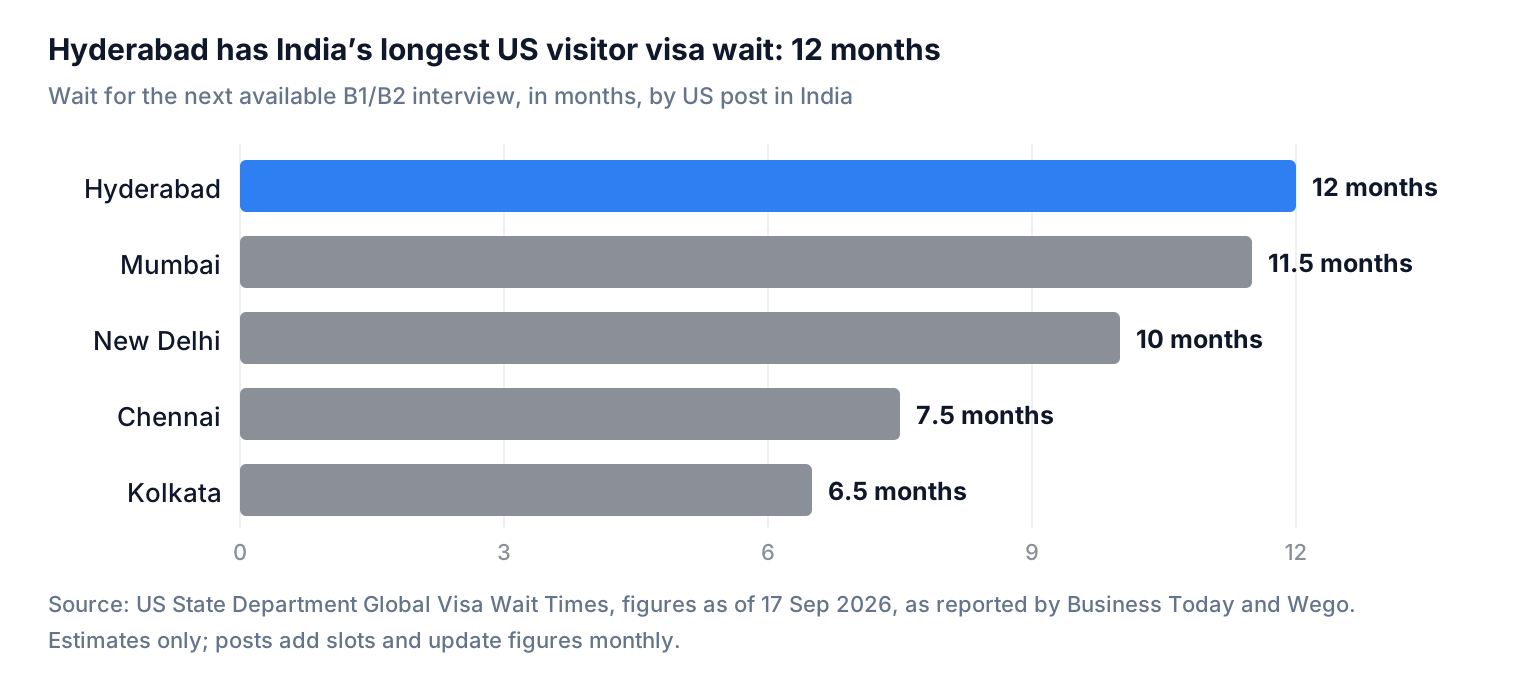
The State Department's average B1/B2 wait figures tell the same story: about 11.5 months in Hyderabad, 11 in Mumbai, 7.5 in New Delhi, 7 in Chennai and 6 in Kolkata. Behind the backlog, reports point to staffing: a US Government Accountability Office report cited by Business Today says officers handling non-immigrant visas dropped by about a third between 2024 and 2025.
What Indian travellers should do:
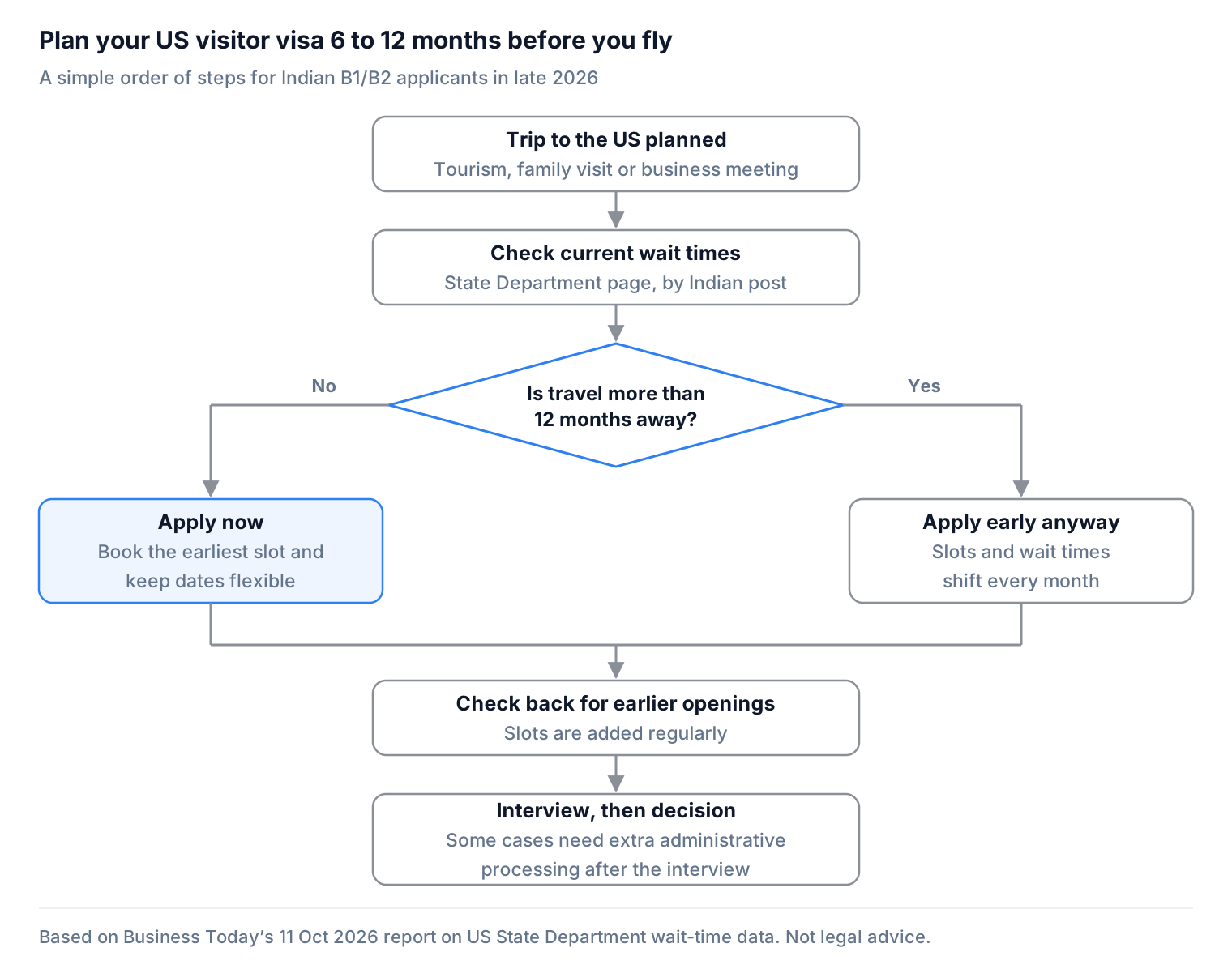
- If you might travel to the US in the next 12 months, start your application now rather than after you book flights.
- Compare the wait at all five US posts in India on the State Department's Global Visa Wait Times page before you pick a slot.
- Already booked? Check back regularly; posts add appointments and the figures update every month.
- Leave room after your interview. The published wait does not include any administrative processing that some cases need.
- Avoid non-refundable bookings until your visa is in hand.
Students and workers move faster
The long queue is mostly a visitor-visa problem. Student (F, M and J) interviews were showing two and a half months or less at every US post in India, and under half a month in Chennai. Work visas grouped as H, L, O, P and Q ranged from one month in Kolkata to 5.5 months in Hyderabad. The State Department does not split out H-1B, L-1 or O-1 separately in these figures.
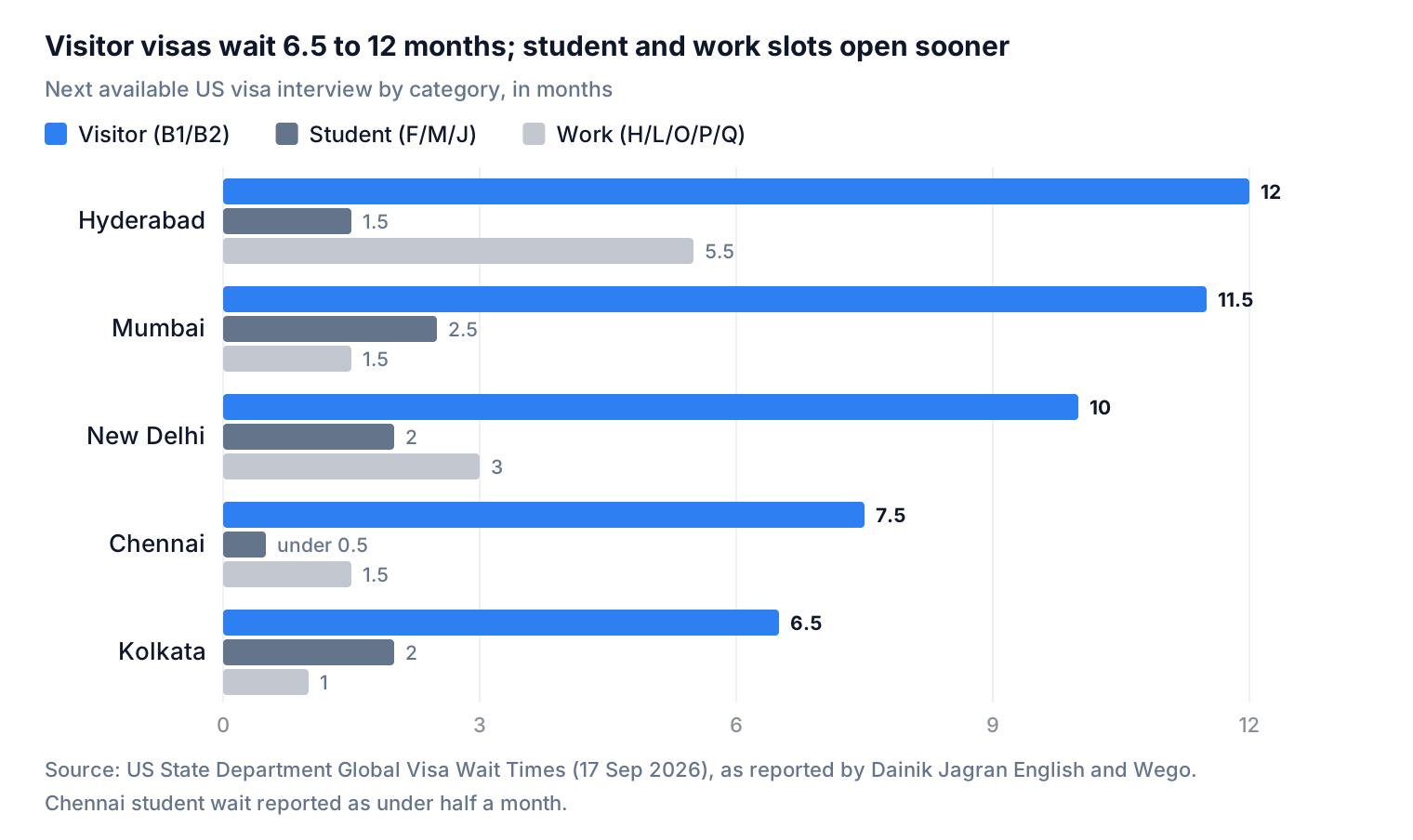
What this means for you: if you are a student heading out for the spring intake, your interview is unlikely to be the bottleneck, so focus on getting your documents right. If you are a parent planning to attend a graduation or visit family in the US, your visitor visa is what needs the longest lead time.
New Zealand: parent visa picks now go mostly by queue date
Many Indian families with children settled in New Zealand use the Parent Resident Visa to join them. Immigration New Zealand (INZ) changed how it chooses applicants from 5 October 2026. All valid expressions of interest (EOIs) now sit in a single pool. About 90% are selected in order of the date they were submitted, and about 10% by random ballot.
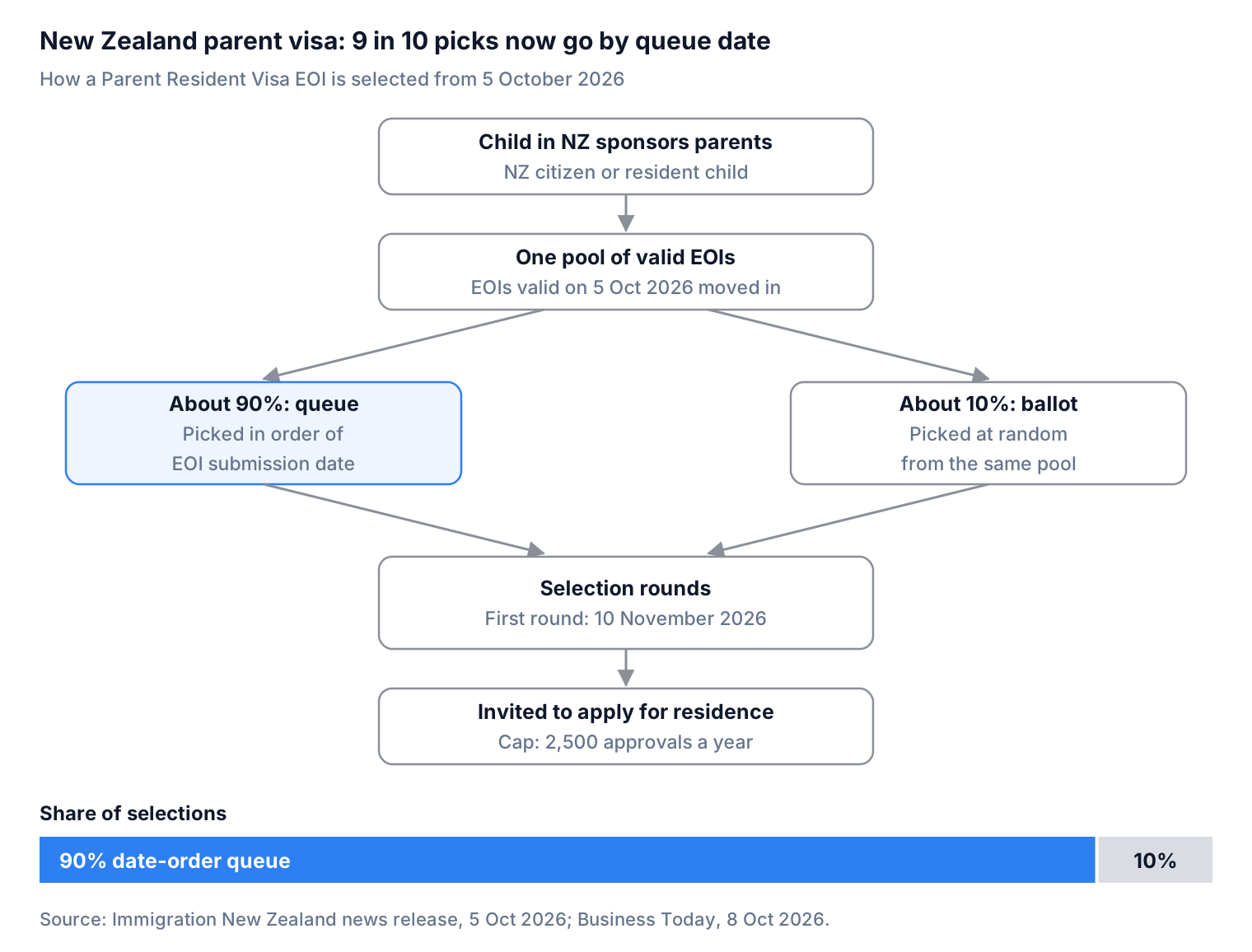
The first selection under the new system is scheduled for 10 November 2026, and the annual limit stays at 2,500 approvals in principle. Eligibility rules have not changed: parents still need a New Zealand citizen or resident child as sponsor and must meet health, character, English-language and sponsorship requirements.
What to do:
- If your EOI was valid on 5 October 2026, you do not need to submit a new one. It moved into the new pool automatically.
- INZ will tell you your queue position once ordering is finalised; it has asked people not to contact it for this in the meantime.
- Keep your email address and contact details current with INZ, as selection notices are sent electronically.
- Business Today reports that EOIs no longer lapse automatically after two years, but you must confirm you want to stay in the pool within six months of each two-year anniversary.
Apply with Krosz
Long waits make mistakes expensive: a wrong detail on a form can cost you a slot you waited months for. On Krosz, every application is handled one-to-one by a trained Krosz visa expert, who checks your forms and documents against the current requirements before anything is filed, so you walk into your appointment prepared.
The Krosz service fee is a flat ₹1,999 + 18% GST, with government visa fees shown separately at checkout. Visa decisions always rest with the embassy or immigration authority.
Planning a trip in 2027? Check your destination's rules and start your application today. Check your visa →
Sources
- Business Today: US visitor visa delays, the 15 cities with the longest interview wait times (11 Oct 2026)
- Wego: US visa wait time in India, visitor appointments up to 12 months (1 Oct 2026)
- Dainik Jagran English: US visa wait times for Indians stretch to 12 months (26 Sep 2026)
- US State Department: Global Visa Wait Times
- Immigration New Zealand: Parent Resident Visa hybrid selection process now in place (5 Oct 2026)
- Business Today: New Zealand changes parent resident visa rules (8 Oct 2026)
Visa rules and wait times change often. This article reflects information reported up to 13 October 2026; always confirm with the official embassy or immigration portal before you travel.